

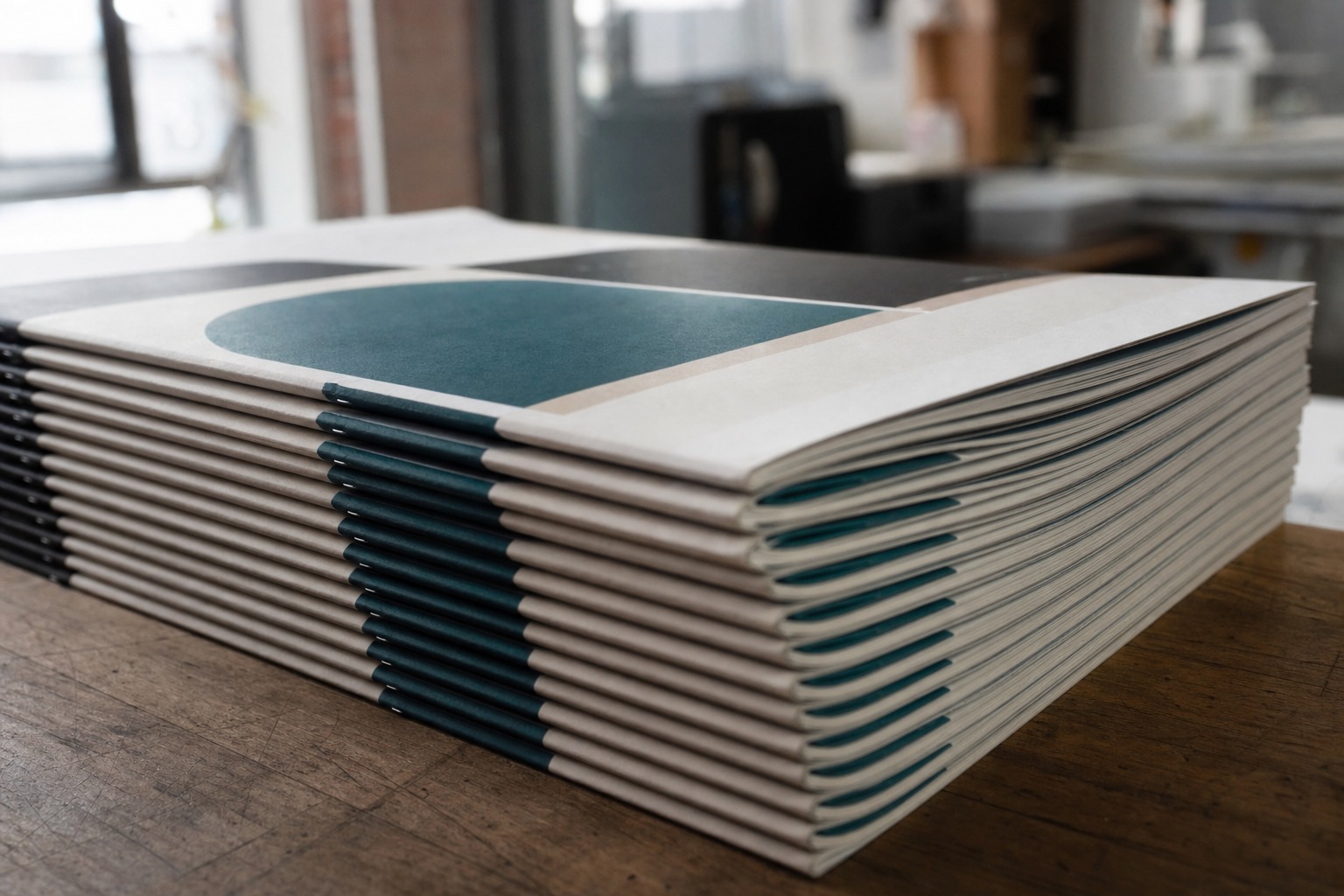
Offset or digital for a 10,000-piece corporate run: the short answer
Offset usually delivers the lower unit cost when 10,000 identical pieces share one specification and artwork file. Digital is often more economical when the quantity is divided among versions, locations, languages or personalized content.
The decision should not be based on quantity alone. A procurement or marketing team needs to define what “10,000 pieces” actually means:
- One design or many versions
- One language or separate English and Quebec French files
- One delivery point or distribution to many locations
- A single release or phased production
- Standard colour or tightly controlled brand colour
- Static content or variable text, images, numbering and barcodes
- Repeat orders or a one-time campaign
Offset spreads its setup costs across the finished quantity, so its cost per piece generally falls as volume increases. Digital has less production setup, but its imaging cost remains more consistent from one copy to the next. At 10,000 pieces, either method can be appropriate.
Offset vs. digital at 10,000 pieces
The practical choice comes down to total program cost, version structure, colour requirements, schedule and distribution. The following comparison shows how those factors usually affect a corporate run.
| Decision factor | Offset printing | Digital printing |
|---|---|---|
| Cost structure | Higher upfront setup, lower unit cost as the quantity rises | Lower setup, steadier cost per piece |
| Best quantity profile | One large run of identical pieces | Multiple smaller versions within the total run |
| Colour control | Strong choice for repeatable process colour and specified spot inks | Strong process-colour reproduction, subject to the press and calibration |
| Personalization | Limited and usually requires a separate variable-data step | Designed for variable text, images, codes and numbering |
| Proofing | Contract proof plus press approval may be appropriate | A production-device proof can closely represent the final output |
| Version changes | Each plate or setup change can add cost | Files can change between batches with less physical setup |
| Scheduling | Requires prepress, plating, makeready and production planning | Faster path from approved file to production in many cases |
| Inventory strategy | Efficient for producing the full requirement at once | Useful for shorter releases and print-on-demand replenishment |
| Substrate choice | Broad paper and finishing compatibility | Broad but device-dependent substrate range |
| Waste exposure | Extra stock is required for setup and colour control | Lower setup waste, especially for short batches |
This table is a starting point, not a quote. Paper, page count, finished size, ink coverage, finishing, packing and freight can outweigh the printing method itself.
How offset cost per piece changes
Offset cost per piece declines because fixed production work is divided across more finished units. Once the press is set up and running efficiently, producing additional identical copies is usually less expensive than starting another version.
Typical fixed or semi-fixed offset costs include:
- Preflight and file preparation
- Imposition
- Printing plates
- Press setup and makeready
- Colour adjustment
- Wash-ups or ink changes
- Finishing setup
- Quality-control samples
If one setup costs the same whether the press produces 2,000 or 10,000 usable copies, the setup portion assigned to each piece becomes much smaller at 10,000. Paper, ink, press time and finishing still increase with quantity, but they do not necessarily increase at the same rate as the finished count.
This advantage weakens when the job is fragmented. Ten versions of 1,000 pieces may require separate plates, approvals, setup work and version controls. A buyer should therefore compare the quantity per version, not only the combined program quantity.
How digital cost per piece changes
Digital printing usually has a flatter unit-cost curve because it does not require conventional printing plates or the same press makeready. The first acceptable sheet and the last sheet have a more similar production cost.
That structure can make digital competitive when 10,000 pieces contain:
- Regional offers
- Store-specific addresses or hours
- English and French versions
- Department or branch identifiers
- Unique QR codes
- Sequential numbers
- Personalized names or images
- Smaller batches released on different dates
For example, a retail program may need 10,000 shelf talkers but divide them among many store groups, price zones or promotions. Offset may have the lower theoretical cost for 10,000 identical shelf talkers, while digital may produce the lower total program cost once version changes, sorting and obsolete inventory are considered.
Digital cost per piece does not always fall sharply as volume rises. Buyers should ask where the printer’s digital production range stops being economical compared with offset for the exact stock, sheet size and finishing plan.
Costs that belong in the comparison
The correct comparison is the total usable, delivered program cost, not the printing line alone. A low press price can be offset by version charges, finishing, packing, inventory or distribution expenses.
Specifications
Request both quotations against the same finished size, page count, stock, colour specification, coating and finishing requirements. A minor change in paper or format can alter sheet yield and affect the comparison more than expected.
Versioning and approvals
List every artwork version and its quantity before requesting pricing. Identify which elements change, who approves them and whether one master proof is sufficient or every version requires approval.
Finishing
Folding, die-cutting, foil, embossing, binding, laminating and gluing each have their own setup and run costs. Some finishing processes may favour producing the job as one continuous run, even when digital printing initially appears attractive.
Packing and distribution
Define carton quantities, labels, store-level sorting, inserts, skid requirements and shipping destinations. Retail and multi-site programs should be quoted with kitting and fulfilment included, not added after print production has been selected.
Accent Impression prints offset, digital and wide format in Montreal and manages retail POP production, kitting and fulfilment for multi-location rollouts across Canada.
Inventory and obsolescence
Offset may reduce the manufacturing cost per piece but create excess inventory if information changes before all copies are used. Digital can support smaller releases, reducing storage and write-off risk despite a higher print cost per unit.
Quality and colour considerations
Both offset and digital can produce professional corporate work, but quality should be assessed against the application rather than by treating one process as universally superior. The right proofing and colour-control plan matters as much as the press category.
Offset is often preferred when a project requires:
- A specified spot ink
- Long-run colour consistency
- Close matching across several offset components
- Large solid areas or demanding ink coverage
- Repeat production under a controlled specification
Digital is often preferred when a project requires:
- High-quality process colour with frequent artwork changes
- Variable information
- Short version runs
- Quick production samples from the intended device
- Replenishment without reproducing the full original quantity
Buyers should supply current brand standards and identify critical colours before production. If pieces will be produced across offset, digital and wide-format processes, exact visual matching may not always be possible because inks, toners, substrates and surface finishes interact differently. A printer should establish acceptable tolerances and provide representative proofs.
How a 10,000-piece program should be planned
A controlled corporate run should move through specification, version mapping, proofing, production, finishing and distribution with documented approvals. Each stage should have an owner and a clear release point.
1. Build one production specification
Record the finished size, stock, colour, coatings, finishing, packing and delivery requirements. Include intended use, particularly if the piece will be displayed in a store, mailed, handled outdoors or applied to a surface.
2. Create a version matrix
List each language, region, location and artwork variation with its required quantity. The matrix should reconcile to the full 10,000-piece order and identify shared versus variable content.
3. Compare production scenarios
Ask for offset, digital and, where appropriate, hybrid scenarios. A hybrid plan might use offset for a large common component and digital for localized inserts, covers, labels or store-specific pieces.
4. Define proofing and approval authority
State who can approve colour, content and variable data. For bilingual programs, language approval should be completed before production approval. Public bodies usually buy through published tenders and standing offers, so production specifications should align with the applicable purchasing document.
5. Test finishing and packing
Confirm folds, scores, die-cuts, adhesives and assembly before the entire run is released. For multi-location distribution, approve a sample carton or kit showing item counts, orientation and labelling.
6. Reconcile production and shipping
The final report should account for quantities produced, packed and allocated. Store lists and shipping data need version control because an outdated distribution file can undermine an otherwise accurate print run.
Clear recommendation: choose offset or digital when
Choose offset when the 10,000 pieces are substantially identical, the specification is stable and the full quantity will be used. It is especially suitable when unit cost, spot-colour control and consistency across a long uninterrupted run are the leading priorities.
Choose digital when the total is divided among many versions, content may change, or pieces need variable information. It is also a strong choice when reducing excess inventory is more valuable than reaching the lowest possible manufacturing cost per piece.
Choose a hybrid plan when the program combines a high-volume common element with lower-volume localized components. Corporate folders with regional inserts, retail display kits with store-specific labels, and national campaigns with localized cards are common examples.
The final decision should be made from side-by-side quotations based on identical specifications and a complete version matrix. Ask each printer to show setup, versioning, finishing, packing and freight separately enough that the cost drivers are visible.
Frequently asked questions
The questions below address the issues buyers most often need to settle before choosing a production method. Exact crossover points and costs vary by job.
Is 10,000 pieces automatically an offset job?
No. Ten thousand identical pieces often favour offset, but 10,000 pieces split among many versions may favour digital. Quantity per version is more useful than total quantity alone.
Where is the cost crossover between offset and digital?
There is no universal crossover quantity. Finished size, stock, ink coverage, number of versions, press format, finishing and delivery requirements all affect it, so a printer should price both scenarios.
Can digital match offset colour exactly?
Digital can produce close, controlled colour, but an exact match is not always possible across different inks, imaging technologies and papers. Critical colours should be identified early and approved using representative proofs.
Should the order include overs?
Required delivered quantity should be specified clearly. Production allowances vary by process and finishing method, particularly where die-cutting, binding or assembly is involved.
Is it cheaper to print all 10,000 pieces now?
Not necessarily. A full offset run may have a lower unit price, but phased digital production may cost less overall if content changes or unused inventory would be discarded.
What should procurement request in the quotation?
Request the production method, stock, finished quantity by version, proofing, finishing, packing, kitting, freight, taxes and any inventory or storage charges. The quote should also state assumptions about supplied files, approvals and delivery destinations.
Request a quote
Have a print or packaging project? Talk to our team. We take it from concept to delivery, on our own presses, here in Montreal.