
Choosing Paper Stock for Brochures: A Practical Guide
The right paper stock for a brochure balances three things: the weight and feel buyers expect, the finish that suits your images and text, and the budget for your print run. For most marketing brochures in Montreal, a coated text stock between 100 lb and 130 lb gives a professional result without overspending.
Paper choice affects how your brochure looks, how it folds, how it survives shipping and handling, and how much it costs to mail. Getting it right the first time saves reprints and protects your brand. Here is how to think through the decision the way a shop manager would walk you through it at the counter.
What Paper Weight Should a Brochure Be?
Most brochures use text-weight stock for the body and a heavier cover stock only when the piece needs extra rigidity. A standard tri-fold marketing brochure prints well on 100 lb to 130 lb gloss or matte text.
Paper weight in North America is measured in pounds (lb), which can be confusing because the number refers to the weight of 500 sheets at a base size that differs between text and cover grades. A simpler reference point is GSM (grams per square meter), used widely in Canada and internationally.
Here is a rough guide for brochures:
- 80 lb text (about 118 gsm): Light and economical. Good for high-volume handouts and inserts where cost matters most.
- 100 lb text (about 148 gsm): A common choice for tri-fold and bi-fold brochures. Folds cleanly and feels substantial.
- 130 lb text or 80 lb cover (about 192 to 216 gsm): Heavier and more premium. Suits single-fold brochures, menus, and pieces that get handled repeatedly.
- 100 lb cover and up (about 270 gsm plus): Best for postcards, rack cards, and brochure covers, not full multi-fold bodies.
When to Use a Separate Cover Stock
A separate, heavier cover makes sense for booklet-style brochures with multiple folded pages bound together. For a simple tri-fold, a single text stock is usually the better and cheaper option because it folds without cracking.
Coated or Uncoated: Which Finish Works Best?
Coated stocks make colors pop and photos look sharp, which is why they dominate brochure printing. Uncoated stocks feel natural and are easier to write on, but they absorb more ink and look softer.
The coating refers to a clay-based layer applied to the paper surface. It controls how ink sits on the sheet.
Gloss
Gloss coating reflects light and produces vivid, saturated images. It is the go-to choice for product brochures, real estate flyers, and anything photo-heavy. The trade-off is glare under bright light and visible fingerprints on dark areas.
Matte and Silk
Matte (sometimes called dull) coating reduces glare and gives a refined, modern look. Silk sits between matte and gloss, offering decent image sharpness with less shine. These finishes read as more upscale and are easier on the eyes for text-heavy brochures.
Uncoated
Uncoated stock has a tactile, paper-like surface. It suits brands going for an organic or handmade feel, and it accepts pen and stamp ink, which coated stock resists. Colors appear more muted because the fibers soak up ink, so account for that when reviewing proofs.
How Finish Affects Folding and Cracking
Heavier and coated stocks are more prone to cracking along fold lines, especially where ink coverage is dark. Scoring before folding prevents most of this.
Scoring is a crease pressed into the sheet before folding, which gives the paper a controlled point to bend. Any reputable printer scores brochures on cover-weight stock as standard practice. If you are printing a fold on stock heavier than about 130 lb text, ask whether scoring is included. For a brochure printing project in Montreal where pieces ship through cold winter conditions, scoring matters even more because cold paper cracks more readily.
Matching Paper to the Job
The best stock depends on how the brochure gets used, not just how it looks on screen. Match the paper to the real-world situation.
- Trade show handouts: Lighter text stock (80 to 100 lb) keeps weight and cost down across large quantities.
- Direct mail brochures: Check Canada Post dimensional and weight rules before committing, since heavier stock can push a mailer into a higher postage tier.
- Premium sales kits: Heavier silk or matte stock with finishing touches signals quality and justifies the spend.
- Menus and frequently handled pieces: Cover-weight stock or added lamination resists wear, grease, and moisture.
Consider Lamination and Coatings as Add-Ons
Beyond the paper itself, you can add a protective layer after printing. Soft-touch lamination gives a velvety feel that buyers notice immediately. Gloss UV coating boosts shine and durability. Aqueous coating offers light protection at lower cost. These finishing options change both the feel and the price, so weigh them against your goals.
Sustainability and Paper Choice
Recycled and FSC-certified stocks are widely available and let you align print with environmental commitments. Many Quebec businesses now request them by default.
The Forest Stewardship Council (FSC) certifies that paper comes from responsibly managed forests. Recycled stocks contain a stated percentage of post-consumer waste. Both are practical options for brochures, and modern recycled sheets print far better than older versions did. If sustainability is part of your brand story, ask your printer which certified stocks they keep in house, since stocked options usually cost less and ship faster than special orders.
How Stock Choice Affects Cost
Paper is one of the largest single costs in a print job, so stock choice has a direct effect on your quote. Heavier and specialty stocks cost more per sheet, and they can also raise shipping and mailing costs.
A few factors move the price:
- Weight: Heavier stock costs more per sheet and per shipment.
- Coating and finish: Specialty matte, silk, and textured stocks run higher than standard gloss.
- Stocked versus special order: House stocks are cheaper and quicker. Custom orders add lead time and minimums.
- Run length: Paper cost per piece drops as quantity rises, which can make a slightly nicer stock affordable at higher volumes.
Exact pricing varies by job. The most reliable way to compare options is to request a quote on two or three stock choices at your actual quantity, then look at the difference side by side.
Get a Physical Sample Before You Commit
Screens cannot show texture, weight, or how a coating handles light. Always request paper samples or a printed proof before approving a large run. Holding the stock answers questions a digital proof never can, and it prevents costly surprises after the press runs.
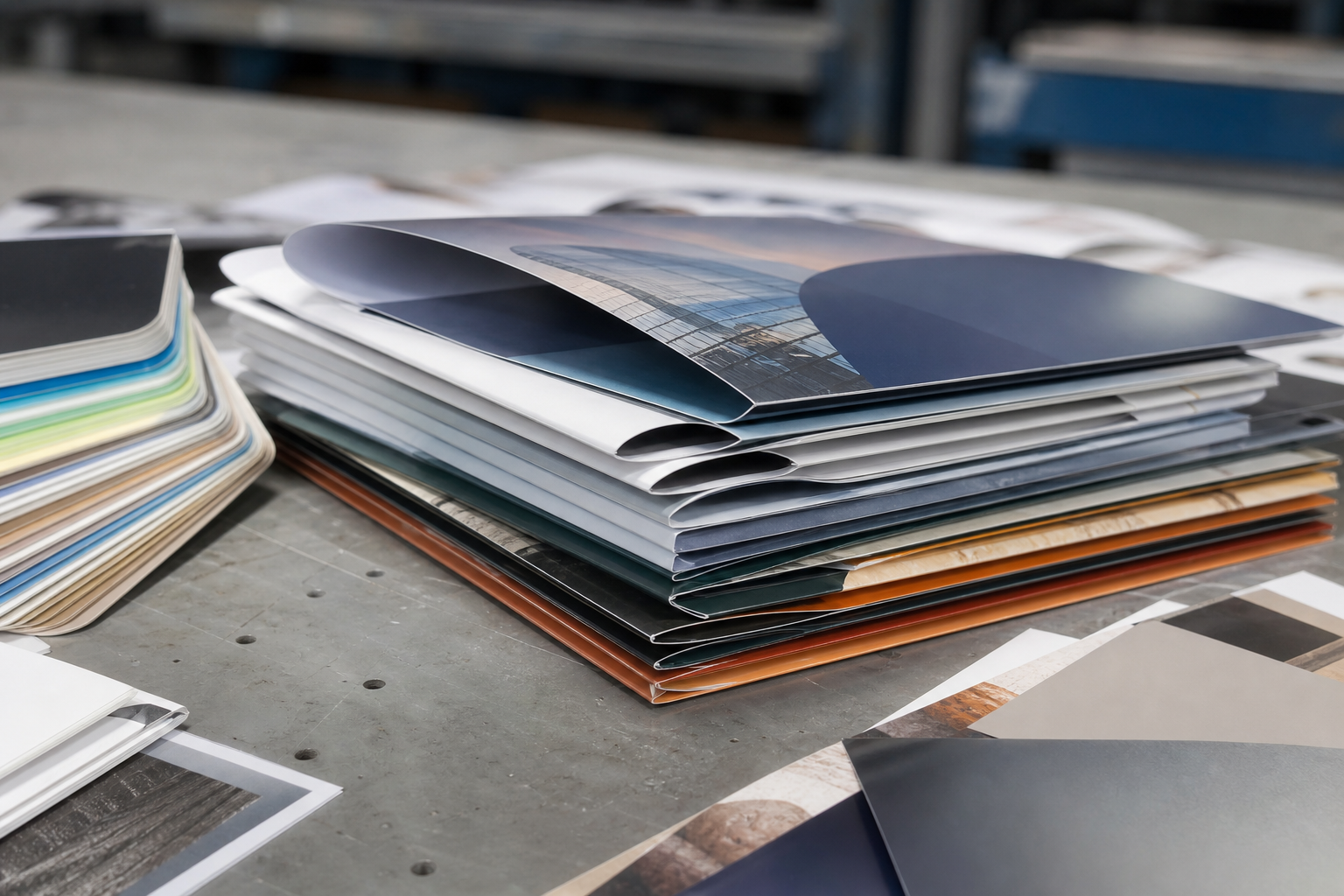
A good printer keeps a sample book or swatch deck and will gladly send physical samples. For a high-value brochure, ask for a press proof on the exact stock so you can confirm color and feel before the full run.
Frequently Asked Questions
What is the most popular paper for brochures?
Coated text stock around 100 lb (about 148 gsm) in gloss or matte is the most common choice for marketing brochures. It folds cleanly, looks professional, and keeps costs reasonable across typical run lengths.
Should I choose gloss or matte for my brochure?
Choose gloss if your brochure is photo-heavy and you want vivid, saturated color. Choose matte or silk if it is text-heavy or you want a refined look with less glare and fewer visible fingerprints.
Will heavy paper crack when folded?
It can, especially on coated cover-weight stock with dark ink along the fold. Proper scoring before folding prevents most cracking, so confirm with your printer that scoring is included on heavier stocks.
Does paper choice affect mailing costs in Canada?
Yes. Heavier stock can push a mailer into a higher Canada Post weight or thickness tier, raising postage per piece. If you are mailing a brochure, check the postal specifications before finalizing the stock.
Can I use recycled paper without losing print quality?
Yes. Modern FSC-certified and recycled stocks print at high quality and are widely available in Quebec. Ask your printer which certified options they stock, since in-house choices are usually more affordable.
How many stock options should I compare before deciding?
Two or three is enough for most projects. Request a quote and physical samples on each at your real quantity, then compare feel, look, and price side by side before approving the run.
Talk to Accent Impression About Your Next Brochure
Accent Impression has been guiding Quebec businesses through paper and finishing decisions for over 36 years. For brochure printing in Montreal and across the province, the team can show you samples, recommend the right stock for your run, and quote a few options so you can compare before committing. Reach out with your brochure details and get a recommendation built around your goals and budget.